2026-02-08 23:03 
Jóanis Nielsen
Jóanis Nielsen

Krígssavnið skrivar:
Hernaðarlegur stóðu tómar
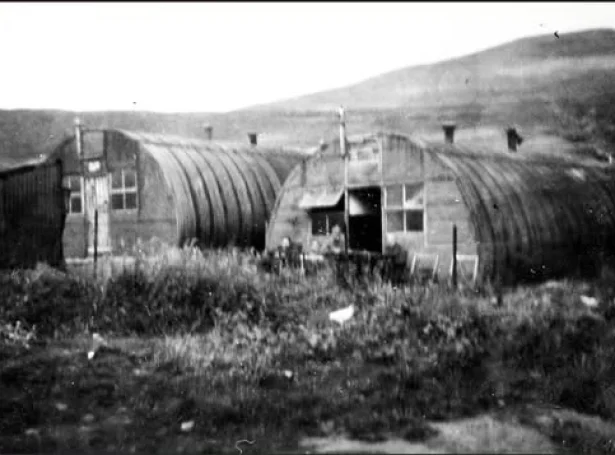
Tá komið var út í 1944, vóru fleiri av hermonnunum í Vágum farnir aftur av landinum. Orsakað av hesum stóðu fleiri hernaðarlegur tómar. Hetta vakti spenning og forvitni hjá tí lokala ungdóminum, og vóru tað summi, ið brutu seg inn í eina ella fleiri tómar barakkir fyri at hyggja seg um. Í hesum sambandi brotnaði okkurt, og onkrir lutir, so sum súkklur, lyktir og gummistivlar, hvurvu.
Fleiri persónar tiknir til forhoyr
Bretar høvdu tó framvegis vaktarhald í hesum legunum, og tí var hetta skjótt uppdagað. Í kjalarvørrinum av hesum vórðu húsarannsóknir framdar, og fleiri persónar vórðu tiknir til forhoyr.
Brutu inn fyri aðru ferð
Tá slíkt hendi fyri aðru ferð, varð tað ovboðið fyri tann bretska ovastan í Føroyum, Colonel W. L. Vale. Í einum brævi til fútan og sýslumannin í Vágum, dagfest 21. apríl 1944, staðfestir hann, at herverk aftur var framt á tvær hernaðarlegur í Vágum. Hóast herverkið ikki varð mett at vera serliga álvarsligt, vísir hann á, at tolið nú var um at vera uppi hjá hersetingarvaldinum.
Hóttu við at leggja landminur út
Tað, sum serliga tykist at hava vakt vreiði hansara, var, at hetta hendi samstundis, sum fólk vóru undir kanning fyri líknandi hendingar, ið vóru framdar á hesar somu legur stutt frammanundan. Í brævinum boðar hann frá, at um slíkt hendir aftur, fer bretska herleiðslan at:
1. áleggja kollektivar bøtur á viðkomandi bygdir
2. seta útigongubann í gildi fyri alla oynna
3. ógilda øll ferðapass til og frá oynni
4. og sum seinasta stig, at leggja landminur út á hernaðarlig øki í oynni.
Heitur á sýslumannin um at tosa við bygdaráðsformenninar
Colonel Vale heitir í brævinum á sýslumannin, um at kunna bygdaráðsformenninar og leggur dent á, at hann helst vildi sleppa undan at taka slík stig. Viðurskiftini millum bretsku hermenninar og lokalfólkið høvdu higartil verið sera góð, og tí óttaðist hann, at slík tiltøk fóru at oyðileggja hesi góðu viðurskiftið.
Føroyingar hildu hetta ikki vera so álvarsamt sum bretar
Hetta mugu metast sum sera harðlig átøk, ið bretar her hóttu við at seta í verk móti vágafólki. Men sæð út frá einum hernaðarligum sjónarhorni, er tað ógvuliga álvarsamt at bróta inn í eina hernaðarlegu. Føroyingar hava hinvegin ikki hildið hetta vera so álvarsligt. Hermenninir vóru farnir úr legunum, og nú stóð alt tómt. Drivin av forvitni og spenningi fóru ung fólk tí at kanna, hvussu har sá út, og um ikki okkurt spennandi var at finna. Men hetta góðtóku bretar als ikki.
Hóast viðurskiftini sum heild vóru sera góð millum føroyingar og bretar, komu javnan hendingar fyri, sum elvdu til konflikt millum partarnar.
Keldur: Krígsavnið. N.J. Arge, skjøl. Jon S Hansen 2019.
Break-ins at Military Camps in Vágar – The British Threatened to Lay Landmines
Military camps stood empty
By 1944, several of the soldiers stationed in Vágar had left the islands. As a result, a number of military camps stood empty. This aroused excitement and curiosity among local youths, and some broke into one or more empty barracks to look around. In the process, some damage occurred and a number of items—such as bicycles, torches, and rubber boots—went missing.
Several individuals taken in for questioning
The British, however, continued to maintain guard duty at these camps, and the incidents were therefore quickly discovered. In the aftermath, house searches were carried out, and several individuals were taken in for questioning.
A second break-in
When similar incidents occurred for a second time, it proved too much for the British commander in the Faroe Islands, Colonel W. L. Vale. In a letter dated 21 April 1944 to the bailiff and the district sheriff in Vágar, he states that vandalism had once again been committed at two military camps in Vágar. Although the damage was not considered particularly serious, he pointed out that the occupying authorities’ patience was now wearing thin.
Threats to lay landmines
What appears especially to have provoked his anger was that these incidents occurred while people were still under investigation for similar acts carried out at the same camps shortly beforehand. In the letter, he warns that if such incidents happen again, the British military command will:
1. impose collective fines on the affected villages.
2. enforce a curfew across the entire island.
3. cancel all travel passes to and from the island; and
4. as a final measure, lay landmines in military areas on the island.
An appeal to the district sheriff to inform the village council chairmen
In the letter, Colonel Vale urges the district sheriff to inform the village council chairmen and emphasizes that he would prefer to avoid taking such measures. Relations between British soldiers and the local population had so far been very good, and he feared that such actions would damage this positive relationship.
Faroese viewed the incidents as less serious than the British did
These must be regarded as very harsh measures that the British threatened to implement against the people of Vágar. From a military perspective, breaking into a military camp is extremely serious. The Faroese, however, did not view it as such. The soldiers had left the camps, which now stood empty. Driven by curiosity and excitement, young people therefore went to explore what the places looked like and whether there might be something interesting to find. The British, however, did not accept this at all.
Although relations overall were very good between the Faroese and the British, incidents did occur from time to time that led to conflict between the parties.
Vinarliga broyt tínar kennifíla - og privatlívsstillingar fyri at síggja hetta innihald